Viking Daily Life: How People Lived During the Viking Age
Viking Daily Life: How People Lived During the Viking Age
When we think of Vikings, many people picture warriors sailing across the seas, carrying shields and searching for new lands.
While exploration and warfare were important parts of Viking history, most people living during the Viking Age spent their days doing something much more ordinary.
They were farmers, traders, craftspeople, fishermen, parents, storytellers, and members of communities built around family and survival.
The Viking world was not only shaped by battles and voyages, but also by the everyday lives of the people who lived within it.
🏡 Viking Homes and Settlements
Most Vikings lived in small settlements made up of farms and longhouses.
The longhouse was the centre of daily life. These large wooden buildings often contained living areas, storage spaces, and sometimes areas for animals during the coldest months.
A central fire provided warmth, light, and a place for cooking.
Life inside a longhouse was built around community. Families worked together, shared meals, told stories, and supported each other through the challenges of the seasons.
🌾 Farming and Survival
Although Vikings became famous as explorers and warriors, many were farmers.
They grew crops such as barley, oats, and rye, while also raising animals including cattle, sheep, goats, and pigs.
The harsh northern climate meant that farming required patience and skill.
During the summer months, communities worked hard to prepare supplies that would help them survive the long winters.
Farming was not simply a job — it was the foundation of Viking society.
🐟 Food and Feasts
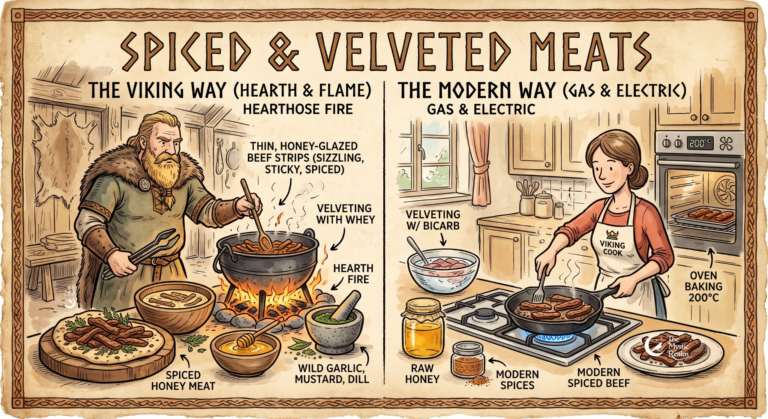
Viking food was based on what could be grown, raised, hunted, or gathered.
Common foods included fish, meat, bread, vegetables, dairy products, and berries.
Fishing was especially important for coastal communities, providing a reliable source of food throughout the year.
Feasts were also an important part of Viking culture.
Large gatherings brought people together for celebrations, religious ceremonies, alliances, and important events.
⚒️ Skilled Craftspeople
Viking communities relied on talented craftspeople who created the tools and objects needed for everyday life.
Blacksmiths produced weapons, farming tools, and household items.
Woodworkers built ships, homes, furniture, and carved decorations.
Textile workers created clothing, sails, and blankets.
These skills were highly respected because the survival of a community depended on the ability to create and repair essential items.
👨👩👧 Family and Community
Family was one of the most important parts of Viking society.
Households often included several generations living and working together.
Everyone had responsibilities, from farming and fishing to cooking, crafting, and caring for the home.
Communities depended on cooperation, especially during difficult times.
Stories, traditions, and knowledge were passed from one generation to the next through families and gatherings.
🛡️ The Role of Warriors
Although not everyone was a warrior, fighting and defence were important parts of Viking society.
Some people travelled overseas in search of wealth, trade opportunities, or new lands.
Warriors were respected for their courage and skills, but they were only one part of a much larger society.
The Viking world also depended on farmers, traders, builders, and craftspeople.
📜 Stories, Music, and Traditions
Storytelling was a major part of Viking culture.
Before many stories were written down, they were passed from person to person through spoken traditions.
Sagas, legends, songs, and poems preserved memories of heroes, gods, ancestors, and important events.
Gatherings around the fire provided entertainment and helped communities remember their history.
🌌 Beliefs and Everyday Life
Norse beliefs influenced many parts of daily life.
The changing seasons, natural events, and important moments were often connected to their understanding of the gods and the world around them.
Festivals and rituals helped communities mark important occasions and strengthen their connection to tradition.
Their mythology was not separate from life — it was woven into the world they experienced every day.
🌍 The Legacy of Viking Life
The Vikings were much more than raiders and warriors.
They were ordinary people living extraordinary lives, building communities, exploring new lands, and creating traditions that continue to interest people today.
By understanding their daily lives, we see the real people behind the legends.
The Viking Age was not only a time of battles and exploration — it was a time of families, friendships, creativity, and survival.
💬 Continue The Discussion
Enjoyed this Chronicle?
What part of Viking daily life interests you most? Their homes, food, traditions, crafts, or family life?
Share your thoughts, discoveries, and favourite Viking facts with fellow explorers of The Mystic Realm.
Join the conversation in our community forum and become part of the realm.